From Where I Sit: America is a Soccer Country
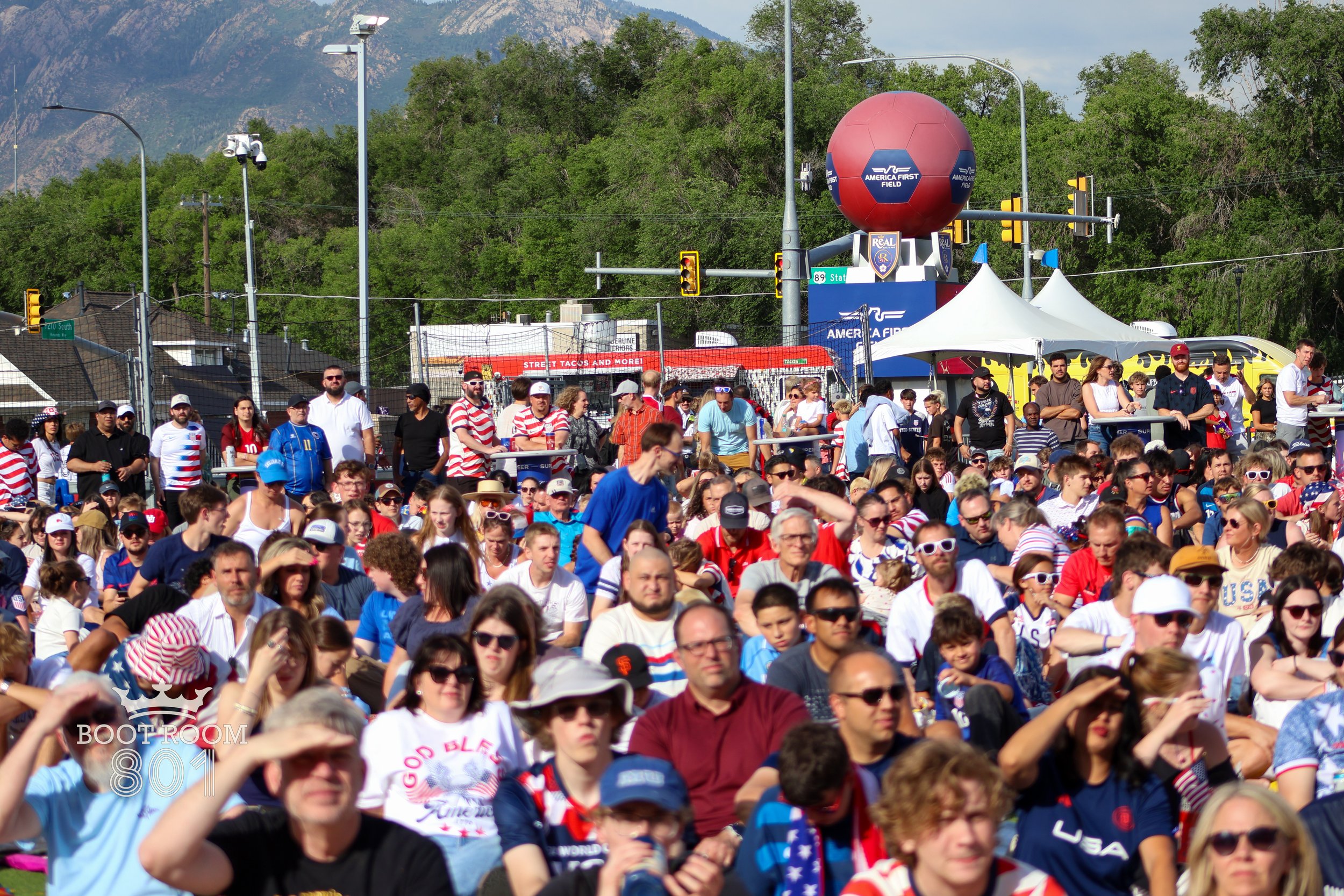
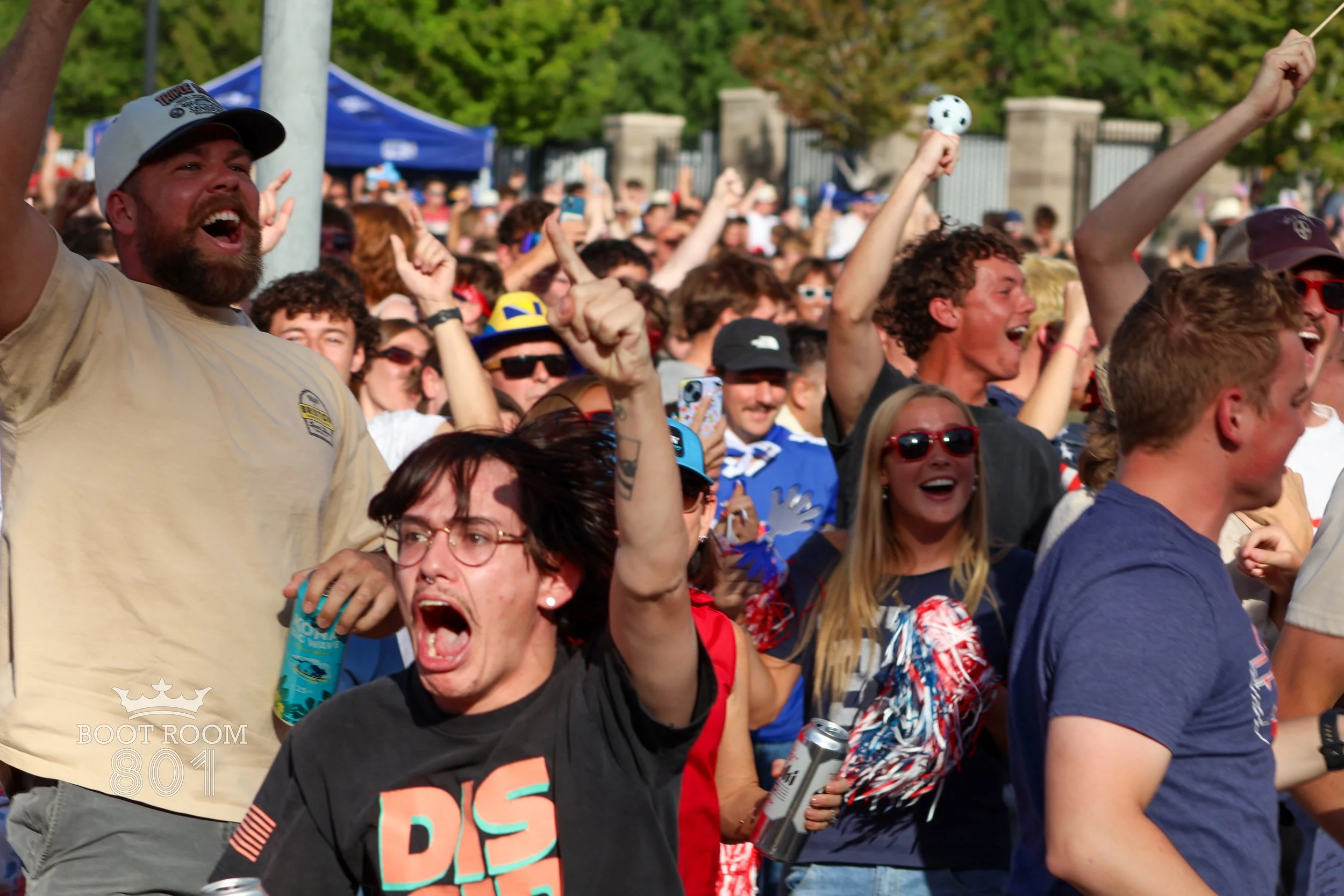
Ten thousand fans filled America First Field for the USMNT vs. Bosnia watch party.
A stillness washes over the once rowdy spectators at America First Field as the crowd realizes what just happened. The roar now replaced by a silence that feels somehow louder than the cheering it replaced. A foul just outside the box. No one dares move as a player 750 miles away steps up to take the most important free kick in his country’s history. Down a man and tired, the US needs some magic in this moment. Malik Tillman, with an open wound and a boot full of blood, has the chance to double the lead and potentially win their first World Cup knockout match in 24 years. Tillman makes his approach. The plaza at America First Field holds its collective breath as the ball is released.
This moment is the culmination of 32 years of soccer history building in America. The 1994 World Cup set off a domino effect, inspiring kids to dream about a different kind of football. A phrase started spreading around soccer pitches and schoolyards across the country that has grown into a rallying cry today: “Why not us?”
Today, I see the result of three decades of “Why not us?” mentality. It’s not just about the American-born players making waves across the best leagues in the world. It’s not just about the US hosting the World Cup for the first time since ‘94. It’s about, according to RSL coach and former USMNT player Pablo Mastroeni, “... going to sports bars and watching people, and it doesn’t matter what game is on, celebrating soccer.” It’s the 10,000 fans standing together, unified in support of a team representing them on the world stage.
“... going to sports bars and watching people, and it doesn’t matter what game is on, celebrating soccer.”
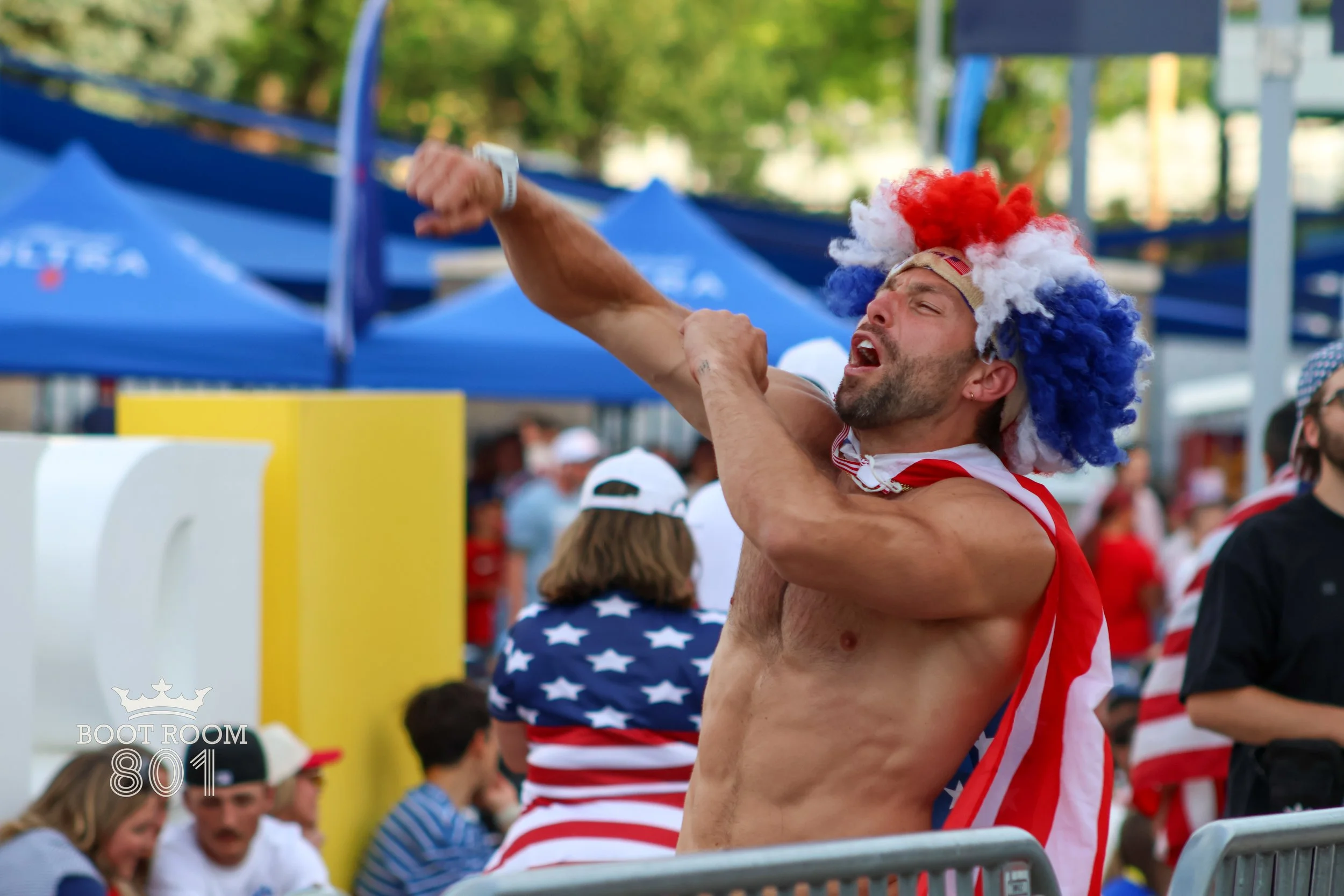
Looking around the plaza at America First Field, I don’t see strangers watching a soccer game together. I see a united sea of Americans proudly waving flags, dancing, and cheering on their team. Children with their eyes glued to the screen. Others running around the plaza pretending to be Pulisic, Tillman, or Balogun. Division set aside. Disagreements forgotten. What I see is the pure love of the beautiful game and support for their team.
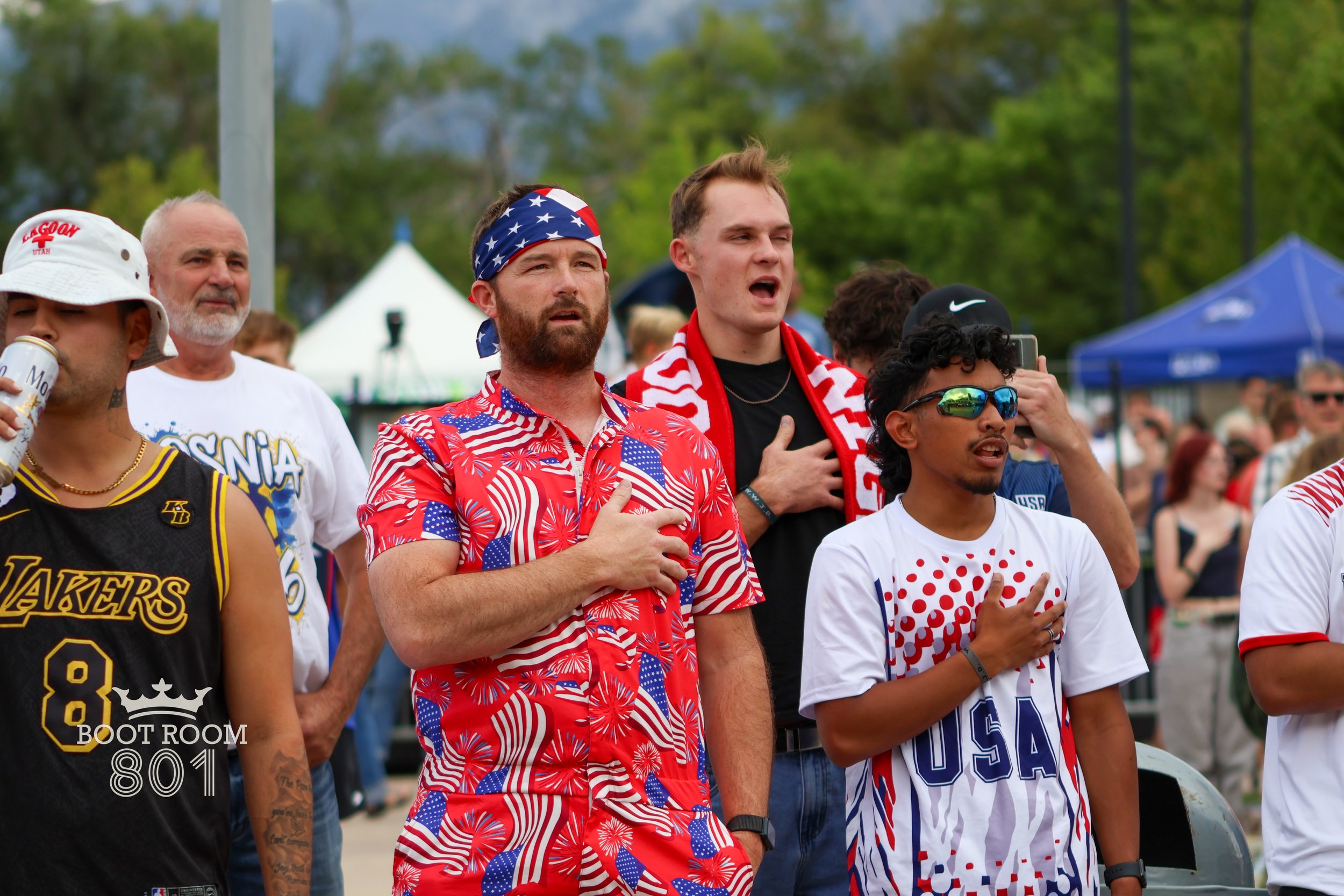
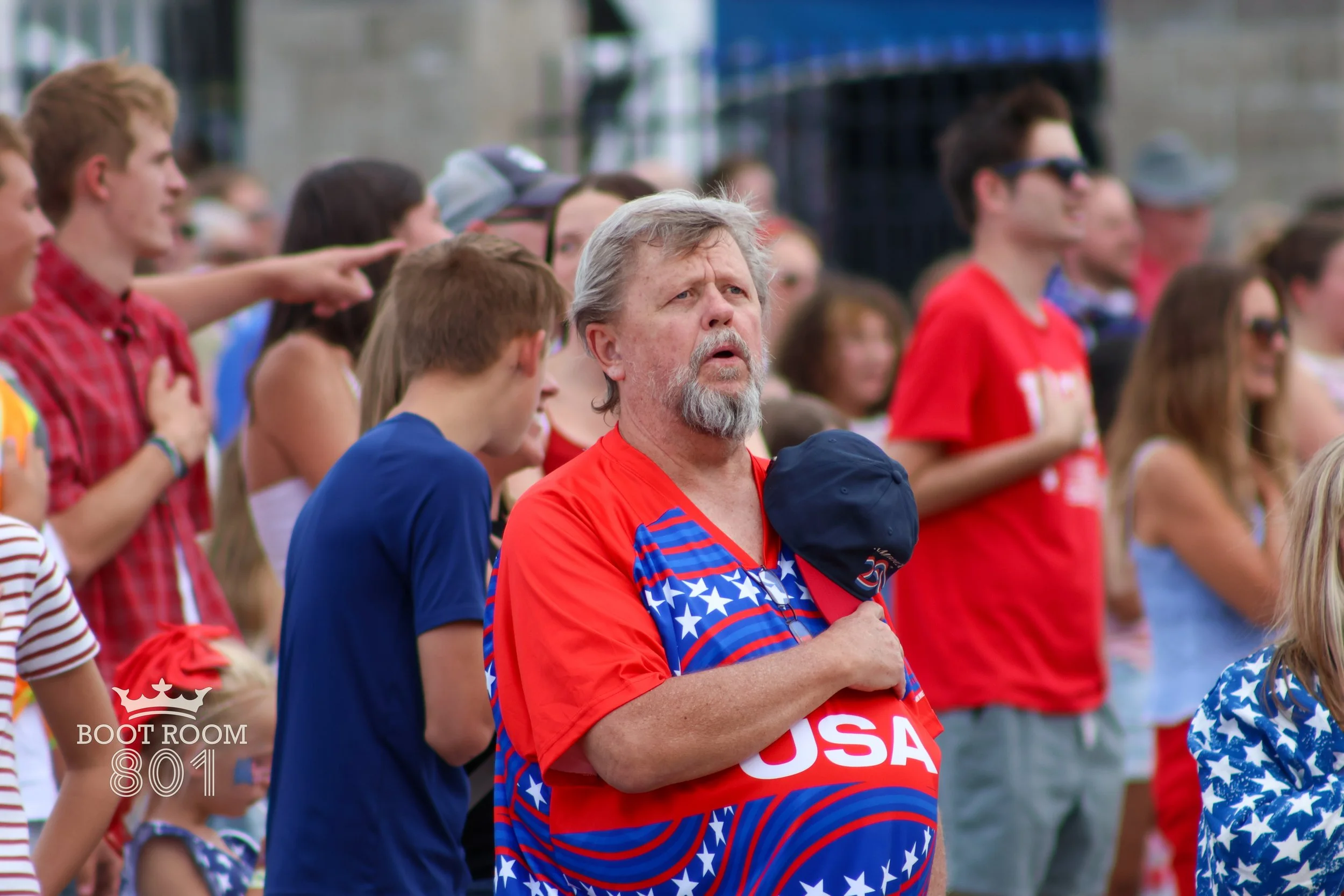
The first half kicks off to cheers of excitement from every part of the plaza. It isn’t long before the game gets interesting. In the 31st minute, Balogun takes a strike and puts it in the back of the net. The crowd erupts into cheers and tears as the offside flag goes up, negating the goal. Vindication comes before the half ends as Balogun nutmegs the keeper, giving the US the lead. Chants of “Balo! Balo! Balo!” echo across the plaza. Hope fills the hearts of US fans who can already taste the round of 16 as the first half whistle blows.
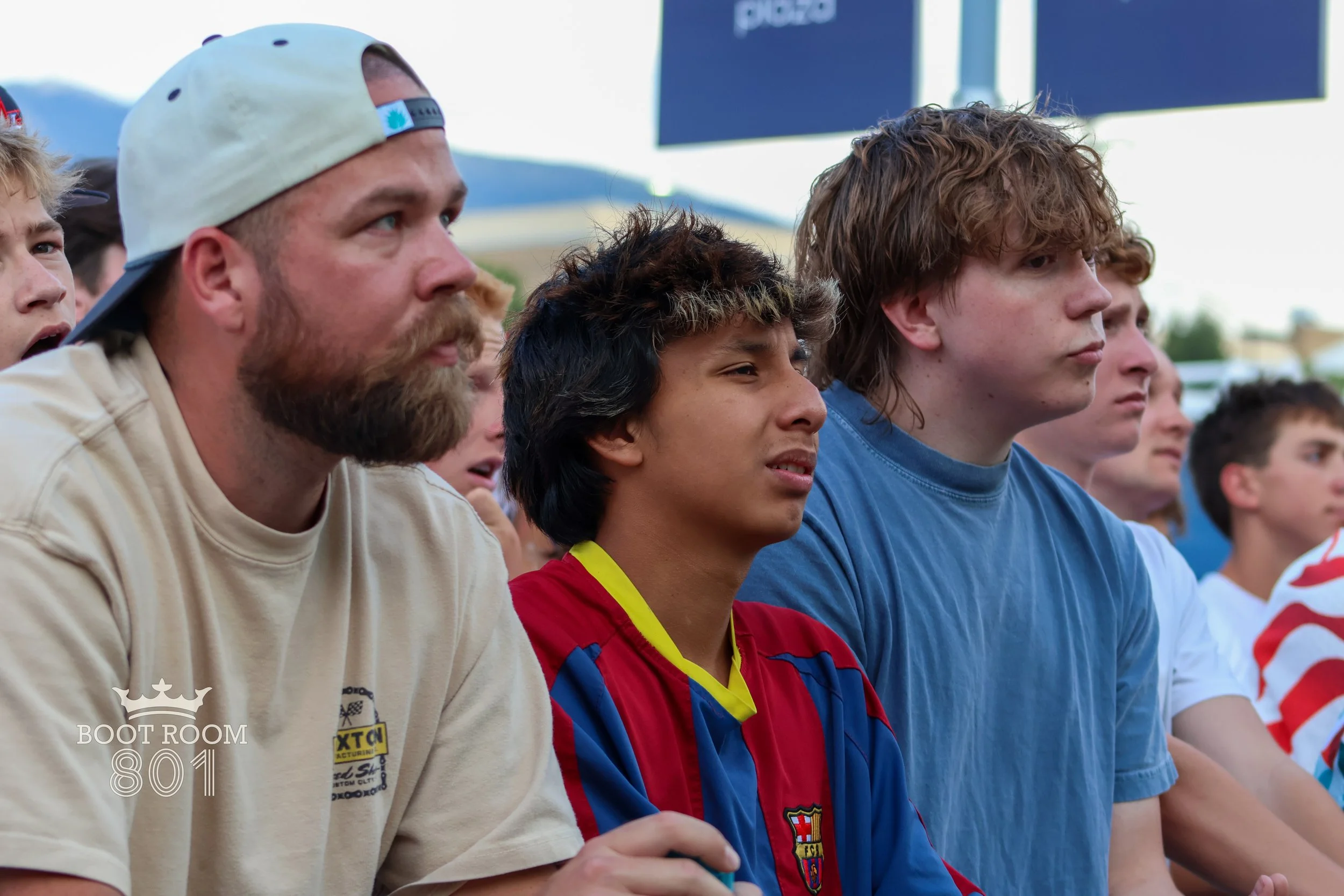
Fans watch with concern after Balogun is sent off with a red card.
With a sense of what ‘could be’ in the air, the crowd packs in tighter for the start of the second half. Songs are flying, flags are waving, people are jumping. The atmosphere is electric. In my time, I’ve seen some special moments at America First Field, but this one will stick in my mind forever. The US looks like it’s going to cruise to victory. Everything is going their way. And then disaster strikes.
The red card heard ‘round the world. Flo Balogun is given a red card after a VAR review that is at best controversial. Regardless of how you view the call, the US is now down to ten men in the 64th minute. The US now holds a one-goal lead over Bosnia & Herzegovina with 26 minutes to play. The mood has gone from celebratory to concerned in a single play. The same question weighs on the mind of every American in the plaza, “Can they hold out?”
In the 82nd minute, Malik Tillman can answer that question. Down a man. Injured and bleeding. Tillman takes a free kick in a situation he likely dreamed about on the pitches of his childhood. The ball leaves his foot, careening toward the wall, clearing it by inches. It then immediately curls down and out toward the near post. The keeper gets his hand on it… It doesn’t matter. The ball goes into the back of the net, restoring the confidence of a nation.
America First Field is 750 miles away from where this match is being played. I would not be surprised to learn they heard the cacophony of cheers that erupted from our watch party all the way in San Francisco. The tension that has loomed over the crowd begins to dissipate with the doubling of the lead. The US is still down a man with eight minutes plus stoppage time to go, but now it’s 2-0. There’s a belief coalescing into certainty.
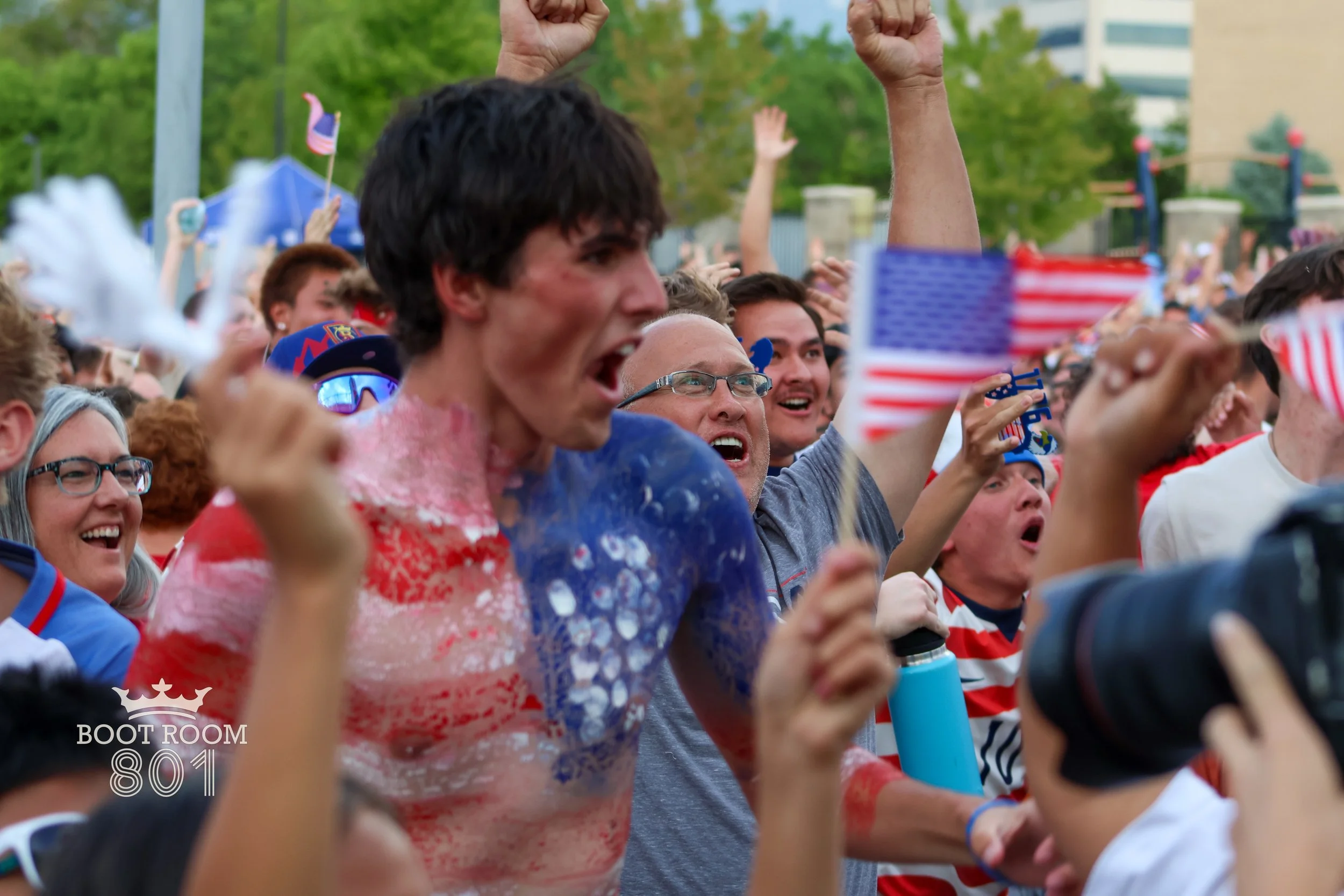
US Supporters cheering after Malik Tillman scores on a free kick to make the score 2-0
As the final minutes are ticking away, the ever-present anxiety of a knockout game gradually transforms to cautious excitement. There is a feeling I can see in the crowd, like the moment before a firecracker explodes. All the potential energy just waiting for a spark. The spark comes in the form of the final whistle, and the explosion doesn’t disappoint.
There are only a few moments in life where you get to feel that you are truly witnessing a historic moment. This is one of those moments. The concussive wave of the cheer at the final whistle hits my chest with enough force to stagger me as I jump to my feet. The shutter of my camera is going like a machine gun, trying to document this moment. Strangers are hugging like long-lost friends. For this one brief moment in time, everyone here is part of something bigger than themselves. Everyone belongs.
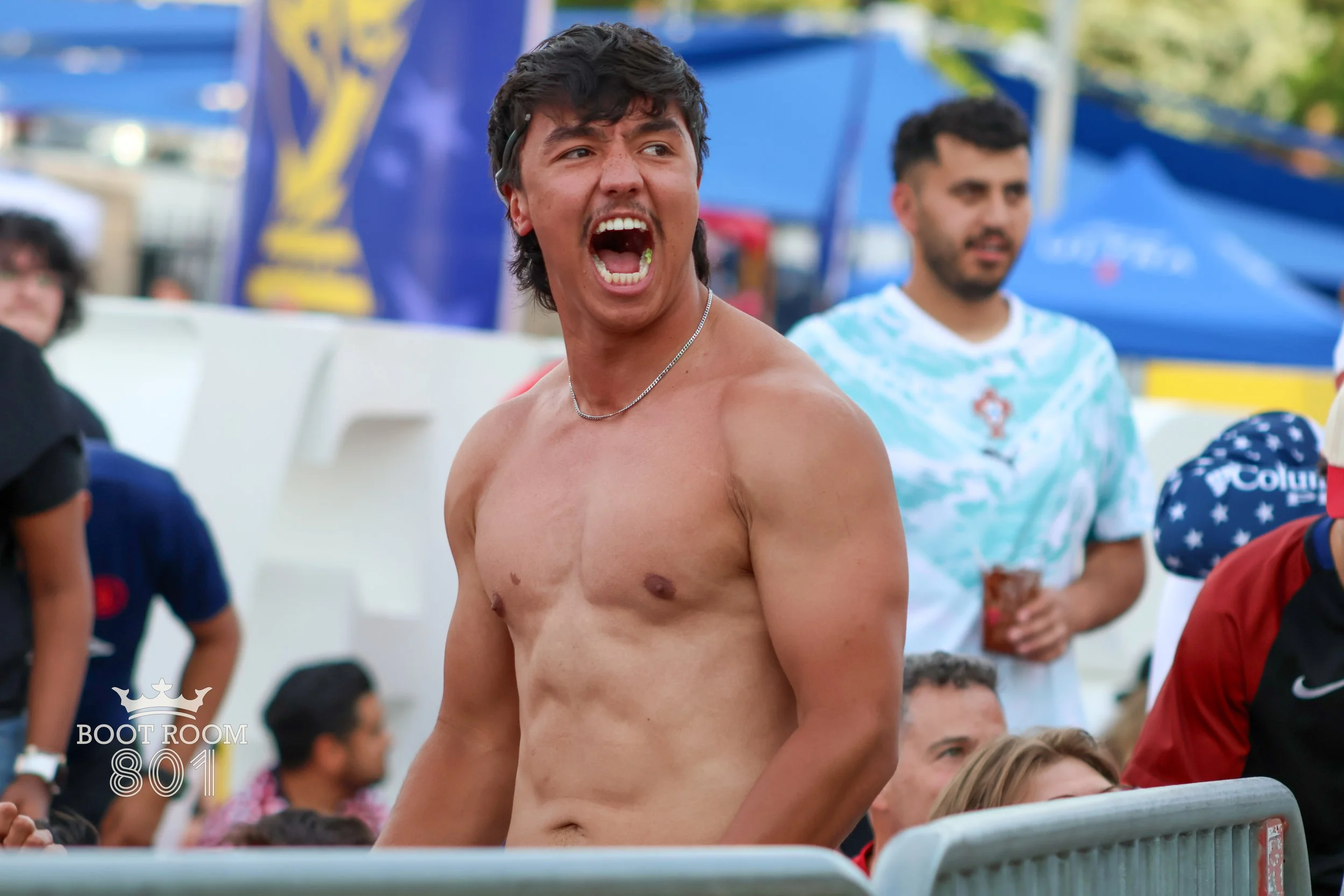
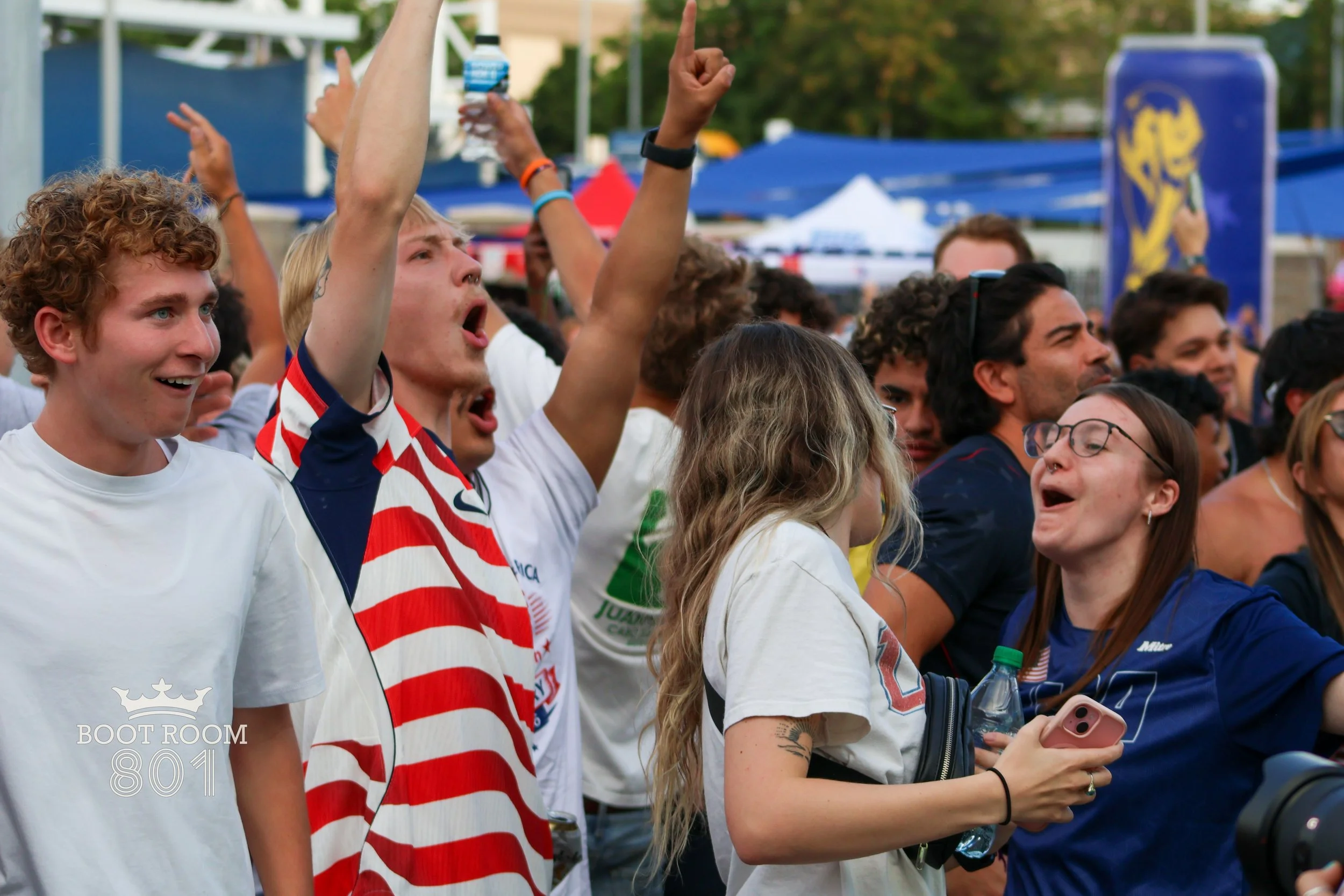
With a tough test still ahead, I am filled with hope. Yes, we’ll be missing Balogun, but the country has belief in this group of players. They showed today that they deserve that belief. Belgium may have knocked the US out of the tournament in 2014, but this belief can carry the US through.
I’ve been asked on several occasions, “When will soccer make it in the United States?” What I witnessed today is something I’ve been hoping for since childhood: Americans loving the beautiful game. America is a soccer country. Utah is a soccer state. So if you ask me again, “When will soccer make it in the US?”
My answer: from where I sit, it has!